AI automation for small businesses
AI for small businesses Ireland
AI solutions for SMEs Ireland

Over thirty years ago I sat in a classroom with my Civics teacher reviewing the results of a career assessment test. The report suggested that engineering would be the best career for me.
The problem was that engineering didn’t interest me at all — and the idea of spending the rest of my life doing mathematics felt overwhelming.
Seven years later I was working as a business analyst in Amsterdam, beginning a career that I had never even heard of when I was filling out my CAO form.
Looking back now, I realise how random the process was that led me there. My career path was shaped more by luck, a summer job, than by any insight or structured career guidance.
Today, more than thirty years later, I find myself sitting at the kitchen table with my seventeen-year-old son having the exact same conversation about his CAO choices and his future career.
And to my surprise, the system has changed very little.
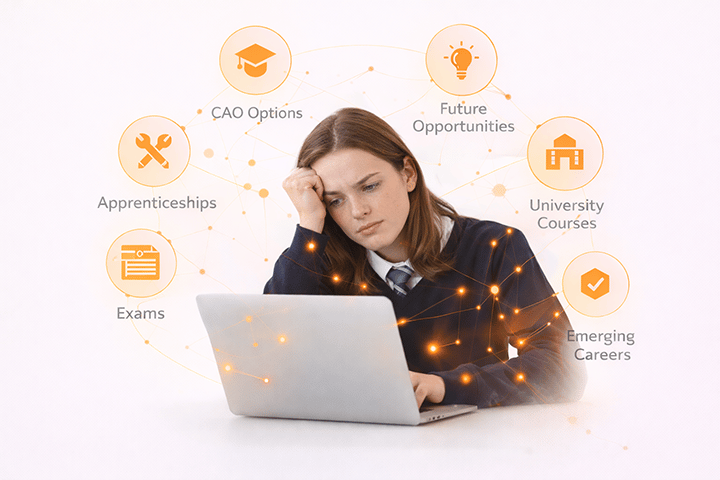
Choosing a career path is becoming increasingly complex for students in Ireland.
There are now over 1,300 courses available through the CAO, alongside a rapidly growing number of apprenticeship pathways in areas such as:
For many students, this level of choice can be overwhelming.
When we started exploring options for my son, my advice was of course a bit biased - inevitably shaped by my own experiences, and my wife insisted that we send him to a professional career guidance counsellor so that we could explore the full range of options available – not just marketing and consumer research where I thought that he would do well.
But what happened next surprised me.
First, there was a waiting list of almost five months to meet with a guidance counsellor. Clearly many other parents were facing the same challenge.
Second, the service came with a significant cost.
And finally, when we received the report, the results looked remarkably similar to the type of career assessment I completed back in the 1990s.
Despite three decades of technological progress, the process of career guidance for students has barely evolved.
One of the biggest issues facing students today is unequal access to career guidance.
Some schools provide strong guidance programmes, while others struggle due to limited resources.
Research presented in the Oireachtas shows that:
At the same time, more than 83% of guidance counsellors say they do not have enough time to meet students’ needs, according to the Teachers Union of Ireland.
Research from the Institute of Guidance Counsellors also shows that the time available for career guidance has fallen by around 16% over the past decade, even as student numbers have increased.
For many students, this means that career guidance may consist of:
Parents who can afford private career counselling often turn to that option — but this creates another inequality.
Equality of opportunity is not just about access to options — it also requires equity in understanding which opportunities are relevant to each individual.
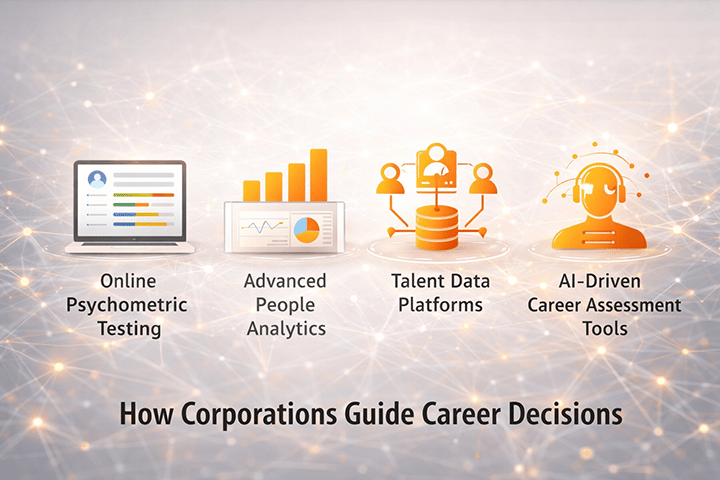
Over the past 25 years I have spent my career working in large multinational organisations.
In that world, the technology used to guide career decisions has evolved dramatically.
Companies now use:
Today, 98% of Fortune 500 companies use AI in recruitment to identify talent and predict career success.
These tools analyse large volumes of data to help organisations understand:
So the question I began asking myself was simple:
Why don’t young people have access to the same level of technology when choosing their careers?
AI career assessment platforms work very differently from traditional aptitude tests.
Traditional career assessments typically rely on:
While these can provide useful insights, they are usually based on a single test taken at one moment in time.
AI models take a much broader approach.
They analyse multiple types of information simultaneously to predict career fit, including:
Unlike static tests, AI systems continuously improve as they learn from new data.
They do not replace traditional psychometric models such as Myers-Briggs or aptitude testing. Instead, they integrate these approaches alongside broader datasets to produce more personalised recommendations.
Put simply:
Psychometric tests describe who you are.
AI models can predict where people like you tend to succeed.
Research into AI-driven career guidance is producing promising results.
Studies show that:
This compares with traditional aptitude testing methods, which typically achieve 40–60% predictive accuracy.
AI tools also improve confidence in decision making.
For example:
These improvements are important because uncertainty about career choices is one of the biggest challenges facing teenagers.
It was these insights — combined with my own experience as a parent — that led me to explore how AI technology could help students in Ireland through my company Bowsy.ie, which was already helping graduates and apprentices get work experience.
This journey eventually led to the development of Bowsy’s AI-driven career assessment platform.
While I am not an AI specialist myself, I partnered with experts who are and have spent years developing this technology.
One of those partners is Dr Juan Swartz and the team at Pivotal Talent, who have been developing AI career assessment systems for over a decade.
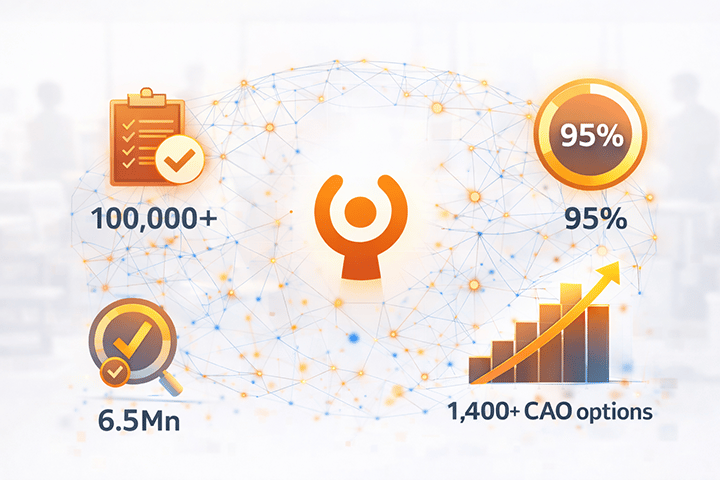
Together we have built a model designed specifically for young people that has been trained using over 100,000 career assessments and 6.5Mn data points.
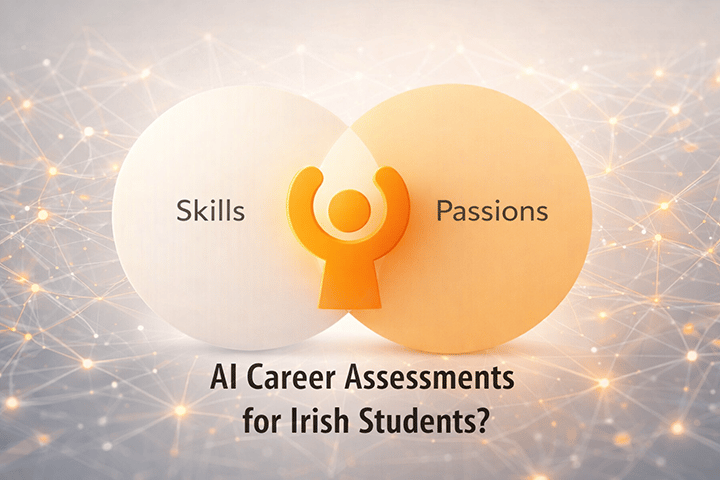
Our system focuses on two simple but powerful questions:
What am I naturally good at?
What do I genuinely enjoy doing?
When these two factors align, students are far more likely to succeed in their careers.
Many students choose CAO courses based on limited information.
Often they only consider careers they already know about — or those suggested by family and friends.
AI tools can help uncover career paths students may never have considered.
This is particularly important in a rapidly changing labour market where new professions are emerging all the time.
Careers in areas such as:
did not even exist when many parents were choosing their careers.
Helping students navigate this expanding landscape is one of the biggest challenges facing families today.
At the time of writing, we are preparing to launch the Bowsy AI career assessment platform in April 2026.
We are currently offering free early access for students who pre-register.
Students who complete the assessment will receive:
After launch, there will be a small registration fee, but students will have ongoing access to the platform and their personalised career insights.
👉 Take the assessment now for €39.99 by clicking on the link below:
https://bowsy.pivotalgroup.io/assessments/career
Finally, it is important to emphasise that AI career assessments are not designed to replace conversations between parents and their children, or the role of guidance counsellors.
Instead, they provide objective, data-driven insights that can support better conversations about career choices.
The goal is simple:
Combine the experience and care of parents and teachers with the power of modern data and technology.
In doing so, we can help young people navigate the increasingly complex world of careers — and perhaps discover opportunities that previous generations never even knew existed.